Case Study / Collective Health
Reframing a Point Solution Into a Systemic Claims Operations Capability
When asked to design a solution for the retroactive termination claims process, I reframed the problem as a systemic gap in claims operations management and proposed a hub that three separate teams later independently validated.
A manual process with real financial consequences
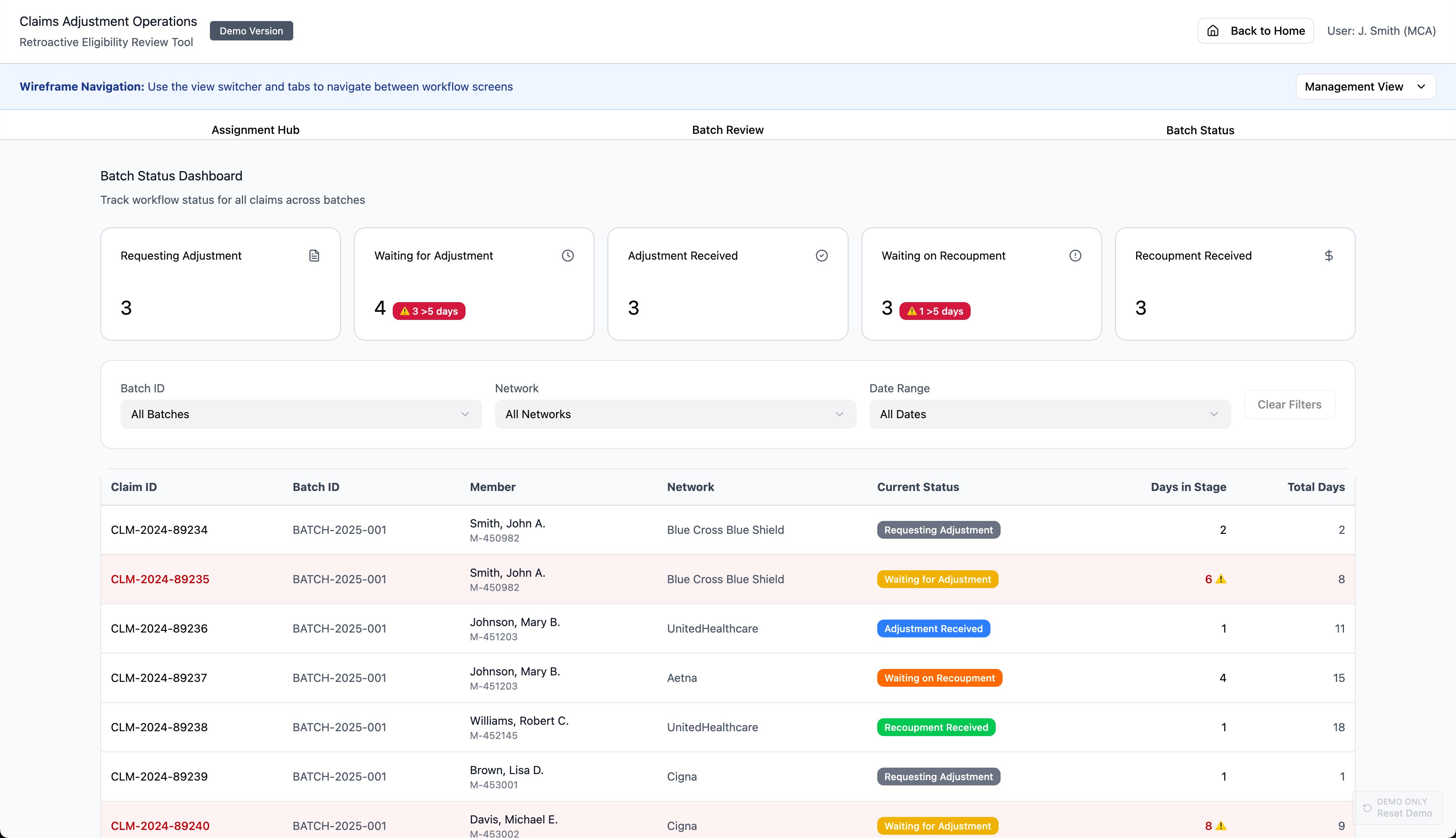
Collective Health's claims operations team was managing a growing volume of retroactive termination claims entirely through manual processes. When a member's eligibility changed retroactively, the team relied on Looker reports to identify impacted claims, Google Sheets to track and assign work, and manual login across multiple external network portals to submit recoupment requests one by one.
Beyond retro claims, ops leadership had no real-time visibility into their team's claims inventory. If a Member Claims Associate (MCA) went on vacation, there was no efficient way to see their assigned claims or redistribute the work. Assignment happened through Google Sheets or direct Slack messages with claim links.
How the work unfolded
The ask: design a retro term solution
The organization had begun a workflow discovery effort to map the end-to-end retroactive termination process. I was brought in by my manager, given my five years as the sole designer for plans and claims at Collective Health, to translate that discovery into a design direction.
The initial brief was scoped around retroactive termination claims specifically. I was not starting from zero on this problem. I had deep familiarity with how ops teams worked, what leadership had been asking for, and where the existing product architecture had gaps.
Observing the workflow, questioning the brief
A service design partner led the intensive process mapping sessions, where claims stakeholders and subject matter experts detailed every step of the retroactive claims lifecycle. I observed these sessions to deepen my operational understanding while managing other ongoing projects in parallel.
Rather than designing directly to the retro term workflow once I understood it, I stepped back and asked what category of problem this actually was.
Retro claims made that gap impossible to ignore, because they arrived in batches and required coordinated assignment and multi-week tracking across networks. But the underlying visibility and assignment gap existed across the organization. I had been hearing about it for years.
A hub, not a point solution
I proposed a claims operations hub rather than a retro term specific tool. The hub would surface retro term claims as a structured workflow within a broader claims management layer, alongside functionality ops had been requesting for years, including the ability to see all claims assigned to a specific MCA and reassign them when needed.
A retro term only tool would have been faster to define and easier to scope for engineering. I made the tradeoff deliberately. A point solution would have sat awkwardly in the existing product architecture and would have duplicated infrastructure we would eventually need to build anyway.
I built the concept prototype entirely in Figma Make, using AI tooling to move quickly from concept to something interactive without waiting on a full design system implementation.
The decisions that shaped the prototype
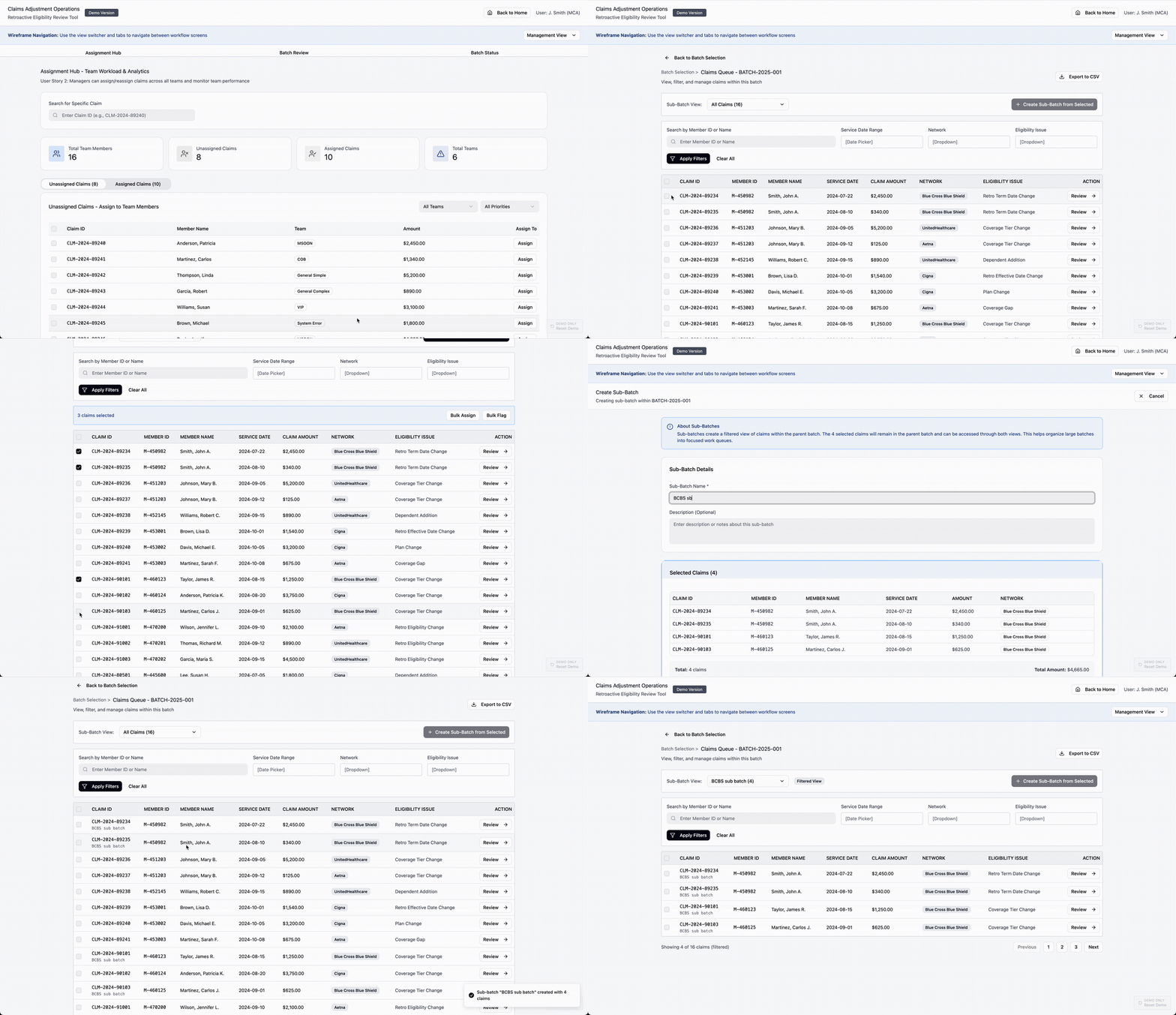
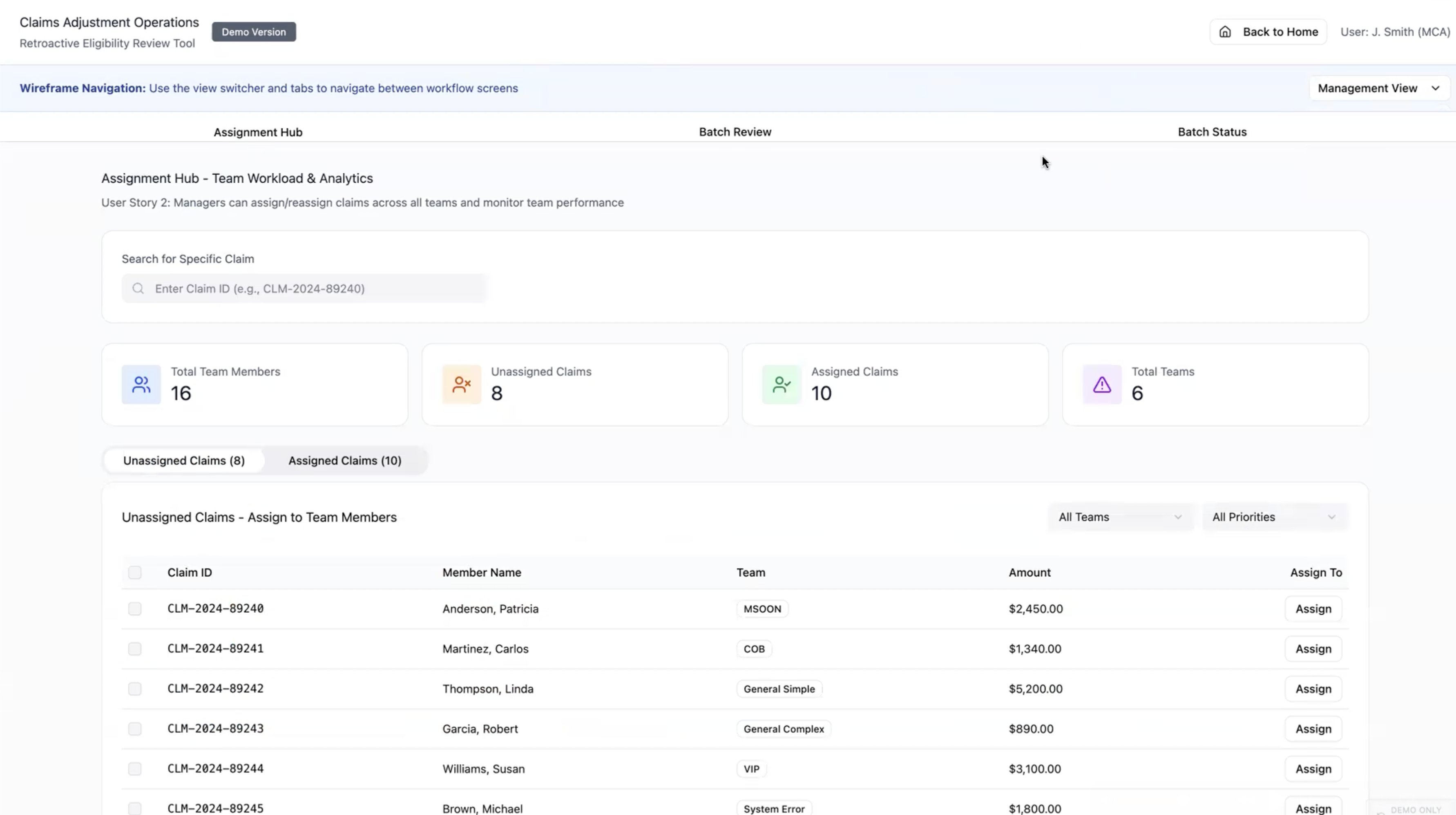
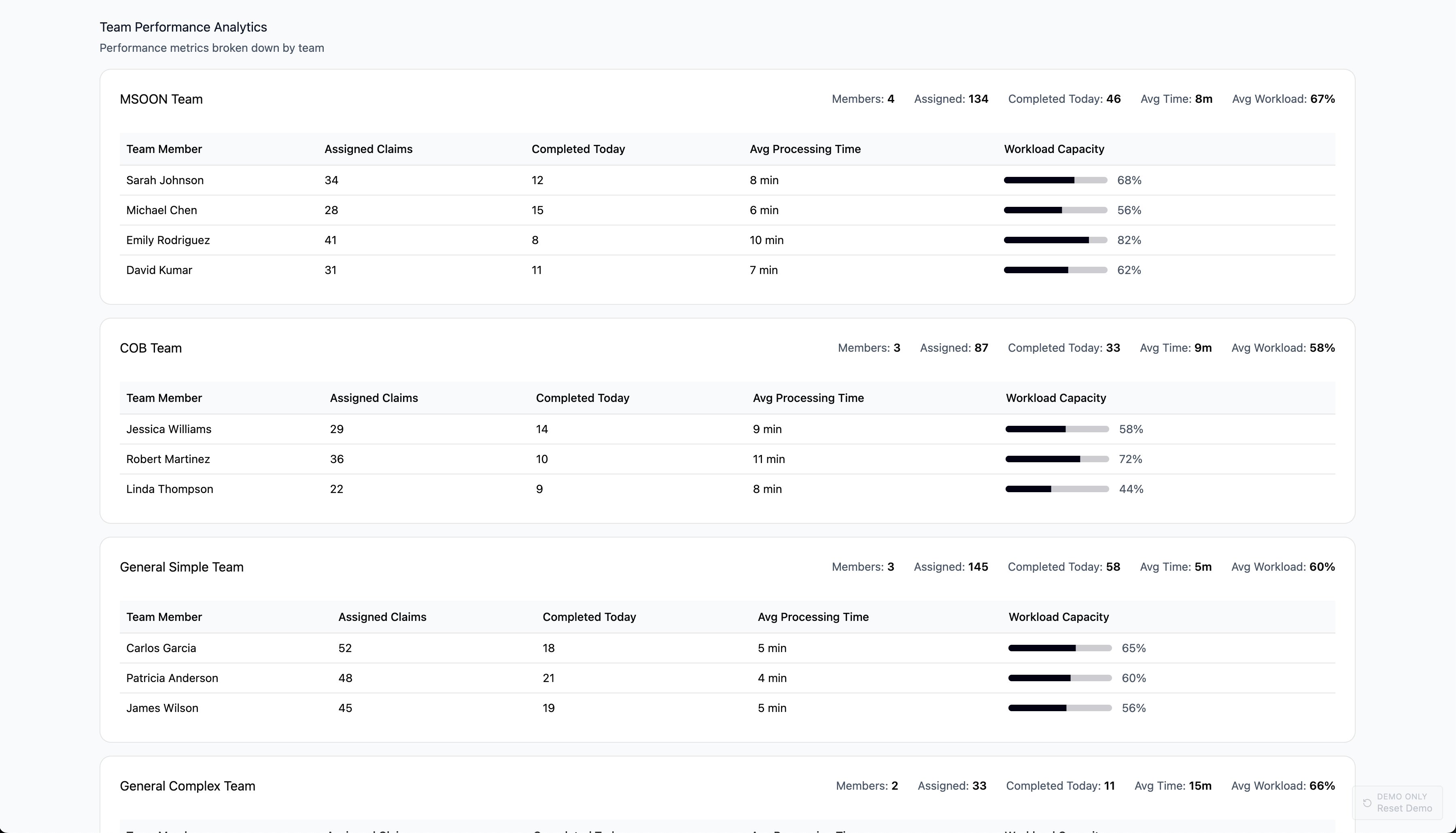
The Assignment Hub was designed for managers, not MCAs. That distinction drove every layout decision. Managers needed a fast read on team health, not claim-level detail. The four summary stats at the top, total team members, unassigned claims, assigned claims, and total teams, were chosen because a manager who knows each MCA should carry roughly 120 claims per day can do capacity math in seconds without drilling into anything. The view was designed to answer one question immediately: are we on track?
One significant decision was cross-team visibility. An earlier consideration was restricting each manager's view to their own team only. I rejected that based on what I had observed over years of working with the ops team. Managers planned claim assignments using Looker data that could become outdated overnight. When Looker refreshed in the morning, as many as 20,000 new claims could appear, instantly invalidating the plan they had built. They spent their mornings reacting and reshuffling instead of managing. A view that showed the full picture across all teams in real time meant managers could see where capacity existed and shift resources before the situation became a crisis.
For the Claims Queue, sub-batches are organized by network rather than by member or date. The reasoning was operational. Different networks follow different recoupment workflows. Grouping by network means an MCA can work through an entire Cigna queue without switching mental models mid-task. The organization of the information reflects how the work actually gets done.
The eligibility issue column was designed with future use cases in mind. Retro termination was the trigger for this project, but discovery conversations surfaced other eligibility events that could cause similar downstream claim impacts. Categorizing claims by eligibility issue type rather than retro term only meant the architecture could accommodate those future cases without a redesign.
For the overall interface, I chose a table layout over more novel approaches. The users are operations specialists who work in data-heavy tools every day. A familiar table structure means they can read and act immediately without learning a new mental model at the same time as adopting a new tool. For an MVP concept, reducing cognitive load at the interface level was the right call.
Presented to director-level stakeholders
I presented the concept to director-level stakeholders across product, operations, and engineering. The prototype demonstrated both the retro term batch workflow and the broader assignment hub functionality so stakeholders could see the concept operating at both levels simultaneously.
What stakeholders said, unprompted
The presentation included director-level product leadership, a claims manager who oversees MCA workload daily, and an ops lead with direct exposure to the retro claims workflow. None of the following reactions were solicited. They emerged during the session in response to seeing the prototype.
Claims Manager
The claims manager who oversees MCA workload day to day recognized the batch automation immediately as a solution to a problem her team lived with constantly.
For those repeatable processes that we can automate, batches would be extremely helpful.
— Claims Manager, in-session
A claims manager naming repeatability as the value signal means the concept mapped directly to how her team already thought about the work.
Ops Lead
The same ops lead connected the hub to a use case that was not part of the presentation scope. She did not ask whether it could apply. She assumed it already did.
It would help with proactive auditing too.
— Ops Lead, in-session
Ops Lead — connecting to a separate problem entirely
Aging claims, tracked internally as ACIRs, were a separate operational problem the team had not come to discuss. The ops lead recognized immediately that the hub concept addressed it directly.
Parts of this solution can also be used as we work on getting the ACIRs in ingenuity (Collective Health's internal claims processing system).
— Ops Lead, in-session
These were not variations on the same observation. Each person independently saw their own problem reflected in a concept scoped to solve something else entirely.
The initiative, the stakeholders, and the problem context were all different. The design direction was the same.
The project was not immediately resourced for build. Several months later, the product director who authored the PRD and oversaw the original project reached out to bring the work into a separate retroactive member eligibility initiative.
He noted that the team already had designs addressing this problem and wanted to ensure the work was shown in an upcoming stakeholder meeting as a concrete path to get that team out of Google Sheets.
Three separate problems. One design direction.
Retroactive Termination Claims
The original brief. MCAs tracking retro claims in Google Sheets with no centralized audit trail or assignment system.
Retroactive Member Eligibility
A separate initiative. The product director who oversaw the original project surfaced the hub design as a path forward for this team.
Aging Claims (ACIR)
Identified by an ops lead during the presentation itself. Aging claims tracked in yet another Google Sheet, same structural gap.
The most important decision happened before any design work
Recognizing that the brief was scoped to a symptom rather than the underlying system was what made the eventual proposal credible to stakeholders who had been living with that system for years.
Five years of working exclusively in plans and claims meant I was not learning the problem space during discovery. I was confirming what I already knew with fresh operational detail. That context is what made the reframe possible and what made it land with people who understood the complexity firsthand.
The fact that three separate teams have independently pointed back to this concept is the clearest signal that the reframe was right.